

Specify the Standard Before You Specify the Instrument
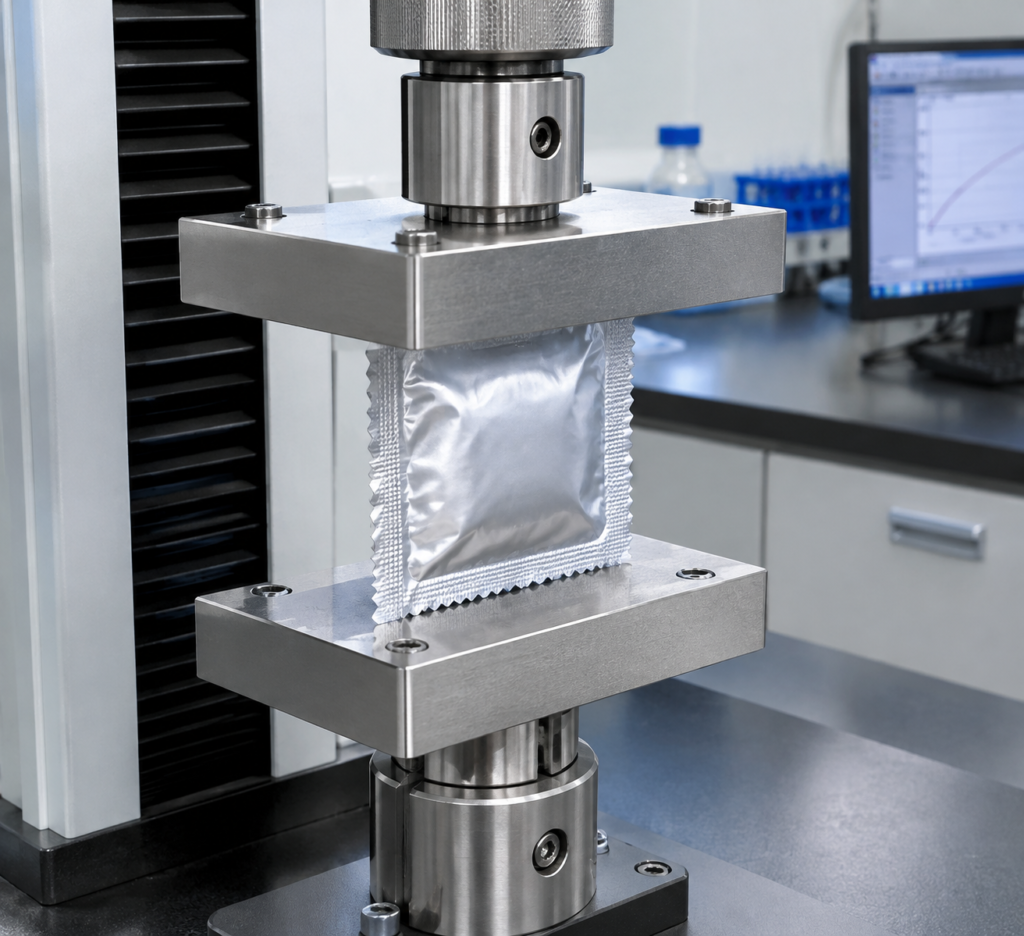
For most condom manufacturers, the right package integrity tester is one built to the seal-strength and leak-detection requirements of [ISO 4074:2026](ISO 4074:2026) — the standard that governs condom packaging directly. [ASTM D3492-24](ASTM D3492-24) covers the condom itself, not the package, so the two serve different scopes rather than the same clause from different angles. Before we can quote you an instrument, we need three things: the specific clause in ISO 4074:2026 your line must satisfy, your pouch format and dimensions, and the test type you must perform. Without those, any quote is a guess.
Assumption 1: Any Leak Tester Will Do
A condom pouch is not a blister pack.
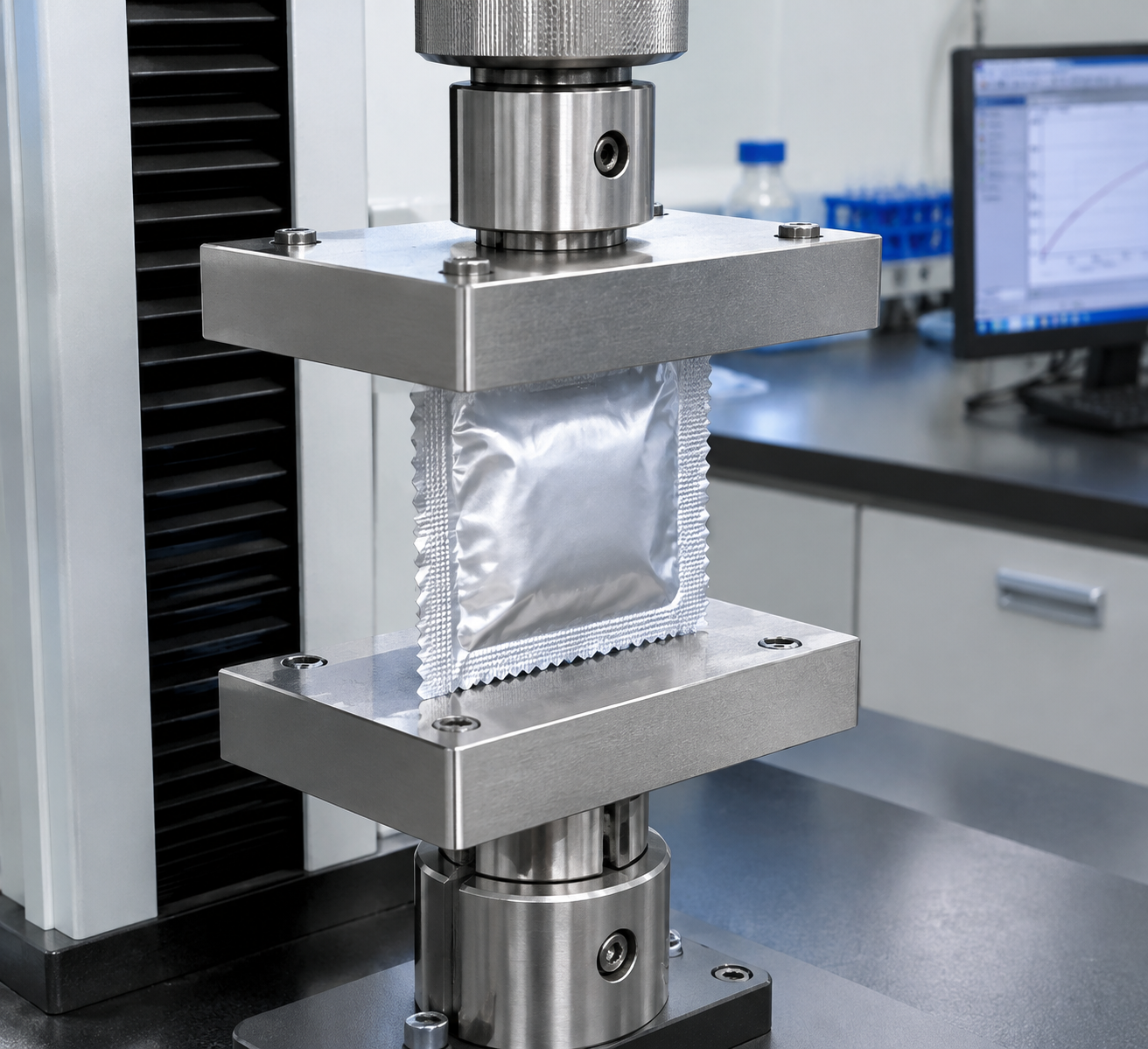
Instruments designed for rigid thermoformed blisters or glass vials rely on the package geometry itself to hold position under test pressure. A condom foil pouch offers none of that. The film is flexible and elongates under load — typical aluminium-foil laminate used in condom packaging stretches nonlinearly once pressure exceeds roughly 10 kPa, and the pouch geometry changes shape before seal failure occurs. A fixture designed for a rigid container will vent around the pouch edges rather than loading the seal uniformly, which produces false-pass results on a marginal seal.
The burst-pressure range for a condom pouch seal is low compared to pharmaceutical blister packaging. Most pouch seals in this category fail well below 50 kPa, whereas a rigid blister instrument is typically calibrated and validated for seal-burst values an order of magnitude higher. At the lower end of that range, a mismatched instrument’s pressure transducer loses resolution and repeatability.
Fixture geometry is the specific failure point. A flat-plate fixture designed for a rectangular blister card cannot conform to the rounded corners and variable-thickness profile of a foil pouch. The result is localised stress concentration at the fixture edge rather than distributed loading across the seal band. That means the instrument is not testing what [ISO 4074:2026](ISO 4074:2026) or [ASTM D3492-24](ASTM D3492-24) require it to test.
When we configure a fixture for a condom pouch, the clamping surface profile, seal-band contact width, and compliance of the sealing pad all have to match the actual pouch geometry. Generic instruments do not offer this.
Assumption 2: Burst Pressure Is the Only Number That Matters
Burst pressure tells you when the seal fails catastrophically. It does not tell you whether the seal was already leaking before it failed, whether a pinhole exists in the film, or whether a partial seal bond will hold in distribution but fail at the point of use.
[ISO 4074:2026](ISO 4074:2026) and [ASTM D3492-24](ASTM D3492-24) are explicit on this: package integrity is evaluated through distinct test methods that target different failure modes.
- Seal strength (peel force per unit width, typically expressed in N/15 mm) measures the adhesive bond along the seal band. A package can pass a burst test and still have a seal-strength value below the minimum if the bond is inconsistent across the width.
- Leak detection identifies breaches that permit fluid or gas exchange under service conditions — pinholes, channel defects, and incomplete seals that do not reduce burst pressure to the failure threshold but allow microbial ingress.
- Burst pressure measures the total pressure the closed package can sustain before structural failure, which is a different question from seal integrity at normal handling forces.
An instrument covering only burst pressure cannot generate the leak-detection or peel-strength data the standards require. These are separate test stations, sometimes on a single instrument platform and sometimes on separate instruments, depending on your throughput and validation requirements. Specifying "a burst tester" when your compliance obligation includes leak detection and seal strength means your instrument set is incomplete from day one. We need to know which test types your standard and clause require before we can size the right configuration for you.
Assumption 3: The Same Fixture Works for Every Pouch Format
Three pouch constructions dominate condom packaging, and they do not behave the same under clamping load. Foil-laminate pouches (aluminium foil bonded to polyethylene or polyester film) are stiff enough that excessive clamping force creases the film and introduces stress risers at the crease. Paper-foil pouches are more compressible and require a softer, wider sealing pad to distribute load without puncturing the paper layer. Plastic film pouches (typically oriented polypropylene or polyethylene laminates) are the most compliant and need the highest contact-area fixture to avoid localised deformation during pressurisation.
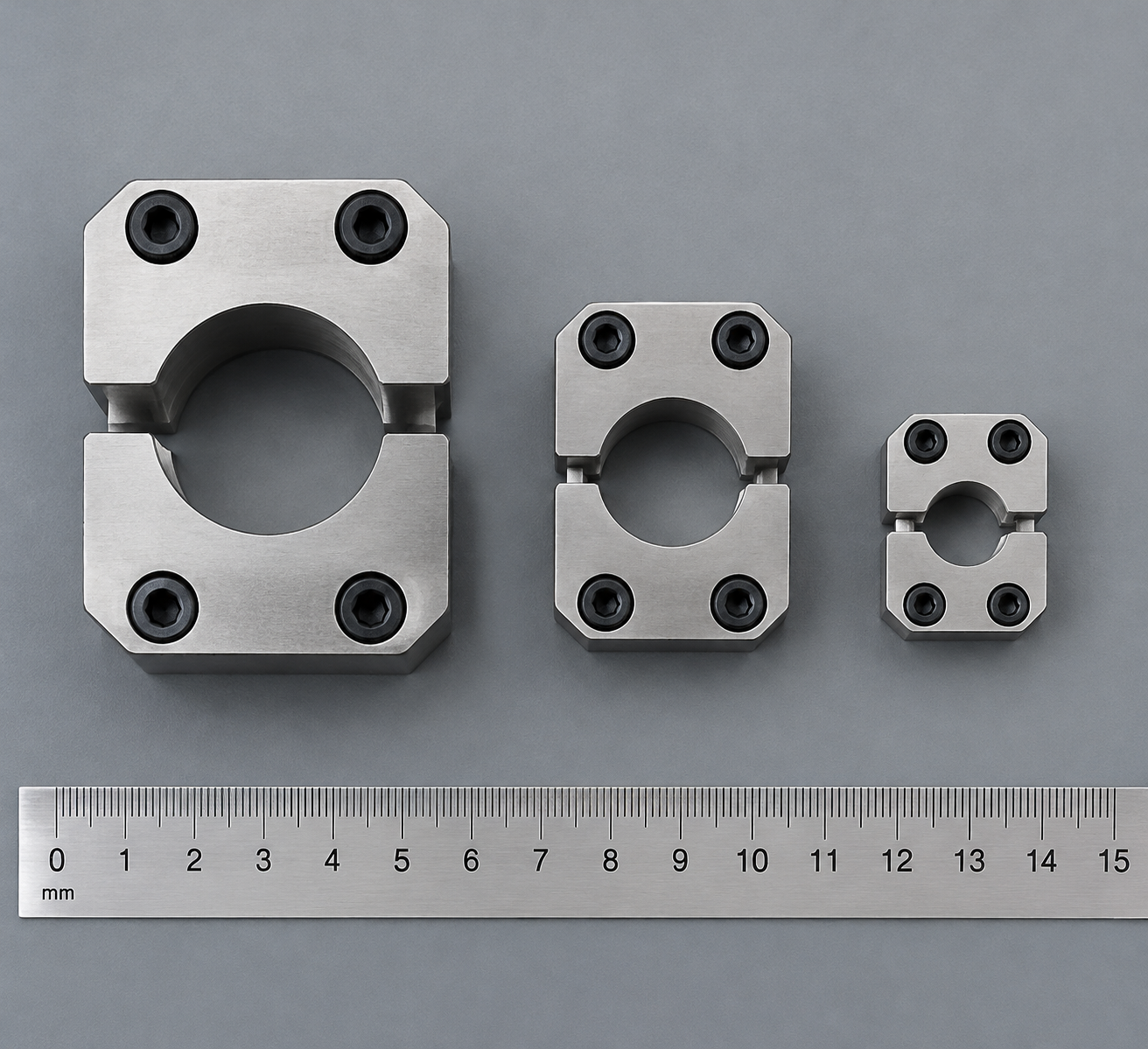
The table below maps pouch construction to the fixture parameters that matter most. Numbers are typical ranges based on the material properties of these constructions; your specific laminate and seal-band width will determine where within each range the correct setting falls.
| Pouch Construction | Clamping Force Range | Sealing Pad Shore A Hardness | Minimum Seal-Band Contact Width | Primary Risk of Mismatched Fixture |
|---|---|---|---|---|
| Foil-laminate (Al foil / PE or PET) | 50–150 N | 40–55 | 6 mm | Film crease introduces false failure site |
| Paper-foil laminate | 20–80 N | 55–70 | 8 mm | Paper puncture vents pressure; false pass |
| Plastic film (OPP / PE laminate) | 30–100 N | 45–60 | 7 mm | Localised deformation shifts seal-load path |
A fixture specified for one construction will generate non-representative results on the others. If your line runs more than one pouch format, you need interchangeable fixture inserts, and the changeover procedure has to be part of your instrument qualification record. Send us your pouch format, the laminate stack, and the seal-band width, and we will specify the correct fixture geometry from there.
Assumption 4: Vacuum Leak Detection and Pressure Leak Detection Are Interchangeable
Positive-pressure leak testing inflates the sealed pouch and monitors pressure decay; vacuum leak testing draws the pouch into a sealed chamber and watches for bubble emission or pressure change on the low side. The two methods are not substitutes for each other inside the standards that govern condom packaging.
[ISO 4074:2026](ISO 4074:2026) specifies inflation-based leak detection: the sealed pouch must hold a defined internal pressure without measurable drop over a fixed dwell time. The relevant clause sets the test pressure at 1.0 kPa and requires no pressure drop over the dwell period at that level. Vacuum bubble-emission testing works from the outside in: it pulls a vacuum around the submerged or chamber-enclosed pouch and looks for escaping air at the seal line, which suits packages where internal pressurisation risks damaging a pressure-sensitive seal before the leak shows itself.
That is the condition where positive pressure is the wrong call: thin paper-foil laminates and some low-tack heat seals can yield under inflation at pressures below the leak threshold, producing a false seal failure that is really a fixture artefact. Vacuum testing avoids loading the seal in that direction, at the cost of a less precise leak-size estimate than pressure decay gives.
Specifying "leak test" without naming inflation or vacuum, and without citing which clause applies to the pouch format in hand, is one of the most common gaps in an incoming RFQ, and it stalls fixture selection until it is resolved.
Assumption 5: A Single-Station Instrument Scales to Production Volume
A single-station tester that satisfies every clause discussed so far still runs one pouch at a time, and cycle time sets a hard ceiling on daily throughput regardless of how sound the seal and leak data are. ISO 4074:2026’s AQL-driven sampling plan ties sample size to lot size, so a larger production lot requires a larger sample pulled from that lot, not a faster single test.
Buyers scale in one of two directions: add stations to run samples in parallel, or accept a longer queue between lot release and test completion. Neither is wrong on its own, but the choice has to be made deliberately against the lot sizes and release frequency the line actually produces, not assumed from the instrument’s spec sheet. A tester validated to the standard tells a buyer the method is correct; it says nothing about how many lots per shift that method can clear.
Confirm the expected sample throughput before ordering a single-station unit on the assumption that one station is always enough.
When a Condom Package Integrity Tester Is the Wrong Choice
A dedicated instrument is not the right purchase in three situations. One-off validation runs or very low-volume pilot batches rarely justify a standalone tester; a qualified third-party lab covering the relevant ISO 4074:2026 or ASTM D3492-24 clause is usually cheaper per test. A facility that already holds a traceable, calibrated instrument covering the same clause does not need a duplicate. And packaging that is not a standard foil, paper-foil, or plastic film pouch, such as a custom rigid shell or blister format, falls outside these standards entirely and needs equipment and a test method built around the packaging standard that actually governs that format.
Standards That Govern the Tests
[ISO 4074:2026](ISO 4074:2026) sets the requirements for natural rubber latex condoms, including the package integrity and seal strength clauses that define the pass/fail thresholds your instrument must verify. It covers the condom and its immediate packaging together; distribution packaging and shelf-life ageing sit outside its scope.
[ASTM D3492-24](ASTM D3492-24) is the rubber latex condom specification and runs parallel to ISO 4074 in markets where ASTM governs. It references burst and air leakage performance but does not define fixture geometry or clamping force for pouch testing, which is why fixture selection still requires matching to your specific package format.
[ASTM D6324](ASTM D6324) covers the evaluation of seal integrity of non-porous flexible packages using a dye penetration method — it does not specify vacuum or pressure decay. It applies where a lab needs a documented seal-channel detection method beyond what the product standard requires, or where a package format departs from the condom-specific clause.
Seal strength by peel testing — the method behind the seal-strength clause in ISO 4074 — falls under ASTM F88/F88M. That standard governs peel force measurement on flexible barrier material seals. It addresses seal quality directly; product performance after sealing is out of scope.
None of these standards cover carton-level distribution testing or stability ageing; those sit under separate transport and stability standards outside this article’s scope.
What We Need From You to Quote
Quoting starts with the standard and clause: ISO 4074:2026 package integrity clause, or ASTM D3492-24, since the clause sets the pressure range and pass/fail limit the instrument has to reach. Without it, we quote for coverage of both, which raises the configuration and the price.
Pouch format and dimensions tell us the fixture, foil-laminate, paper-foil, or plastic film, each needing its own clamping force range and seal-surface fixture. Missing dimensions means a placeholder fixture gets quoted and then revised once samples arrive, adding a lead-time step.
Film or foil material and thickness set the burst and seal thresholds we calibrate to. Required test type, burst, seal strength, or leak, decides whether one station or a multi-method configuration is needed.
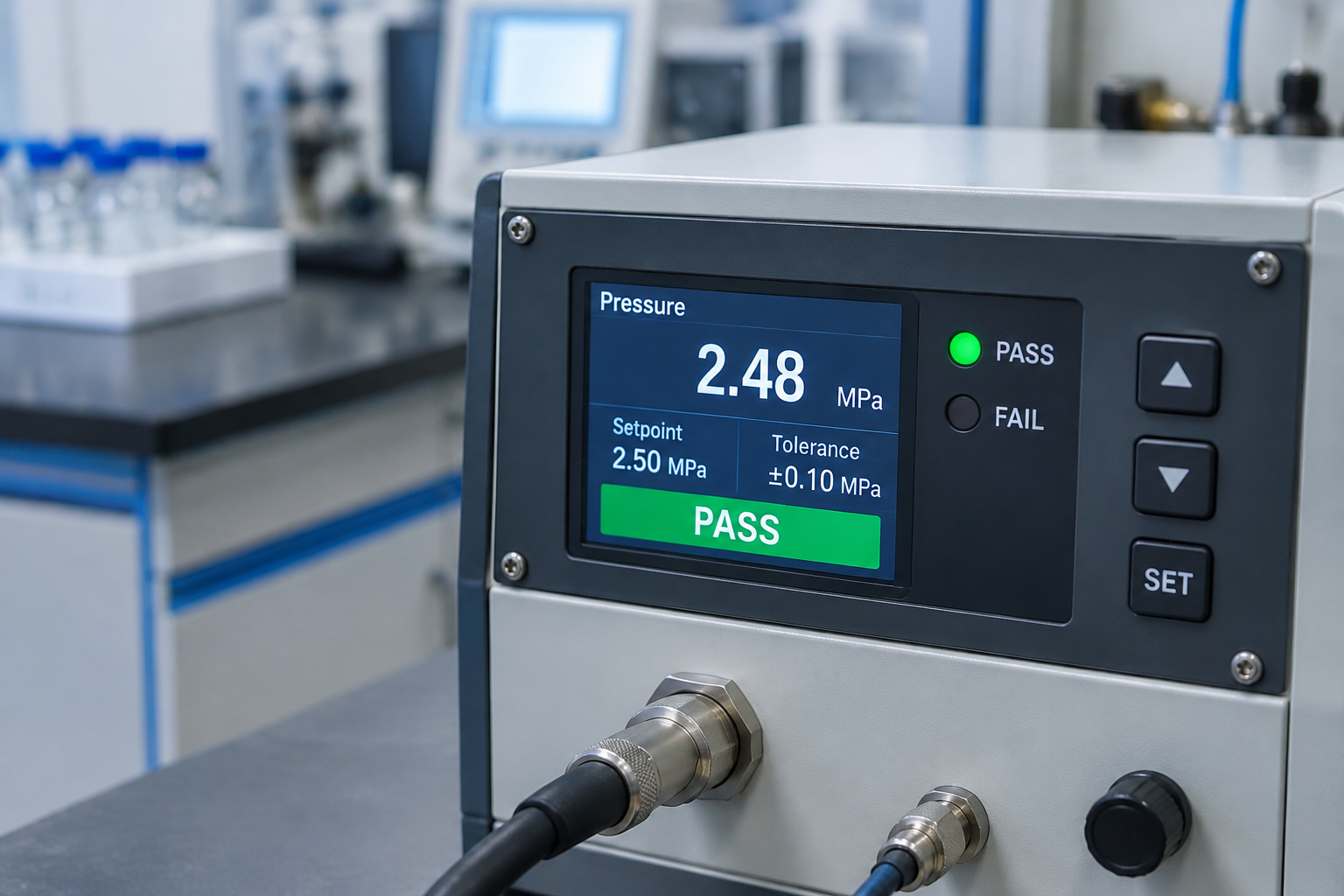
Production volume and any data-output or traceability requirement decide station count and the software output format.
Maintenance and Replacement Economics
Seal fixtures wear at the clamping surface first. Repeated clamping against foil or film edges burnishes the surface, and once clamping force can no longer be held steady across the seal width, the fixture reads false seal-strength values instead of real ones. Wear interval tracks pouch material and clamp pressure reached per cycle, not a fixed cycle count, so it should be checked against the fixture dimensions established at matching, not assumed from a calendar.
Pressure transducers used for burst and leak thresholds need calibration against a traceable reference on a schedule set by the transducer manufacturer and the buyer’s own quality system, not by the test standard itself. ISO 4074:2026 states the thresholds the transducer must resolve, including the limits covered earlier, but it does not set a calibration interval; that stays a buyer decision tied to internal audit requirements.
Gaskets and clamping pads degrade faster under the lower burst pressures and higher film elongation of condom pouches than under rigid-pack testing, since the pad absorbs more of the seal deformation per cycle. Deferred calibration or worn consumables rarely cause an instrument to fail outright. Instead they shift the measured threshold gradually, so out-of-spec product can pass for a run or more before anyone notices the drift. That risk, more than the instrument’s purchase cost, is the real argument for holding a defined calibration interval.
What to Send Us
Send the standard and clause, pouch format, and throughput requirement through the quote-request form or the free technical consultation link, and we’ll match the configuration to the clause rather than quote a generic leak tester. The more of these details you can confirm up front, standard, format, material, test type, and volume, the fewer revision cycles the quote needs.