


The Constraint That Decides Everything
The standard clause you are testing against determines every other specification before we draw a single component.
Instrument type, fixture geometry, pressure range, and data output all follow from that one decision. A burst tester built for [ISO 4074:2026](ISO 4074:2026) Clause 7.4 needs a different pressure envelope and fixture than one built for a syringe integrity test under [ISO/FDIS 7886-1](ISO/FDIS 7886-1). Confuse the two, and the instrument is wrong before it ships.
PEYOTAL manufactures testing instruments against buyer-stated requirements. We are not selling catalogue items with fixed specifications. Send us the standard, the clause, your sample dimensions, and your throughput target, and we quote against that. Send us a product category without a clause reference, and we will ask before we proceed — because guessing costs both parties time neither can recover.
What We Build and What We Need From You

Our scope covers the instruments, not the test programme — that distinction matters when you are specifying what to buy.
[PEYOTAL’s testing solutions](Testing solutions) span air leakage testers, burst and elongation testers, and dimensional check instruments for condom and [medical device testing](Medical device testing instruments). We manufacture under OEM, ODM, and white-label arrangements, and we supply calibration documentation with each instrument along with after-sales service. What we cannot do is select your test method for you: the clause governs the instrument, and the clause is your decision.
To quote accurately, we need the following from you before we can produce a meaningful specification:
- The standard designation and the specific clause or test method
- Product family and the dimensional range of samples to be tested (nominal width, length, wall thickness)
- Required throughput (units per hour or shift)
- Supply voltage, frequency, and plug type for the destination country
- Any export certification requirements
When that information is incomplete, we quote a range rather than a fixed price, or we issue a request for clarification that delays your timeline. The clause reference alone closes most gaps: a buyer who sends "[ISO 4074:2026](ISO 4074:2026) Clause 7.3, air leakage, 500 pieces per shift, 220 V / 50 Hz" has given us what we need to start.
Three Test Duties, Three Different Instruments

The instrument follows the measurand. Each of the three duties below requires a different mechanism, and substituting one for another produces data the standard does not accept.
Burst pressure and elongation — ISO 4074:2026 Clause 7.4
A condom is mounted over a mandrel, the open end sealed, and the instrument inflates it with air at a controlled rate until rupture. The measurands are burst volume (litres) and burst pressure (kPa), both recorded at the moment of failure. [ISO 4074:2026](ISO 4074:2026) Clause 7.4 specifies the inflation rate and the minimum acceptable values for each.
The fixture must accommodate the nominal width range of the product family. A mandrel sized for a 52 mm nominal width condom will not seat a 64 mm product correctly, and a mis-seated sample will fail at a pressure that tells you nothing about the material. The pressure transducer range and the volume measurement system are sized to the clause limits, not to a generic envelope.
Air leakage — ISO 4074:2026 Clause 7.3
Each condom is rolled onto a mandrel and inflated with air to a defined pressure. The inflated condom is then submerged in water, and the instrument monitors for visible bubbling that indicates a pinhole; alternatively, some implementations use a pressure-decay measurement over a defined hold period to detect leakage without submersion. The measurand is pass/fail at a defined inflation pressure and observation interval. No burst event occurs; the mechanism is entirely different from Clause 7.4.
Our [PYT-363 Syringe Air Leakage Tester](PYT-363 Syringe Air Leakage Tester) applies air-inflation leakage detection to syringe barrels under [ISO 23409:2011](ISO 23409:2011). The detection principle is shared; the fixtures, mandrel geometry, and test parameters are specific to each product family. A buyer specifying air leakage testing should confirm which product and which clause before fixture design begins.
Width and thickness — dimensional checks
Nominal width is measured flat, from a defined reference point, under [ISO 4074:2026](ISO 4074:2026) dimensional clauses. Thickness is measured with a contact gauge under a defined force, at specified locations along the length of the condom. Neither measurement requires inflation or electrical stimulus: the instrument is a precision contact or optical measuring system with the appropriate fixture to hold the sample flat and positioned consistently.
Dimensional checks are often treated as straightforward, and the measurement itself is not complex. The fixturing and repeatability of sample positioning are where variation enters. A gauge that allows the sample to shift between readings will produce scatter that a capable product cannot resolve.
Selection Table: Duty to Instrument
| Test Duty | Standard / Clause | Measurand with Unit | Instrument Type | Verification Note |
|---|---|---|---|---|
| Air burst (volume at failure) | ISO 4074:2026 clause 7.4 | Burst volume (L); burst pressure (kPa) | Air-burst inflation tester | Verify pressure transducer calibration certificate traceable to national standard |
| Air leakage | ISO 4074:2026 clause 7.3 | Leak detection (pass/fail at 1 kPa) | Air leakage tester with leak detection capability | Confirm test volume matches fixture geometry and sample dimensions |
| Width | ISO 4074:2026 clause 7.1 | Flat width (mm) at 52 mm or 64 mm from open end | Dimensional measurement fixture or vernier caliper | Verify measurement position corresponds to clause requirement |
| Wall thickness | ISO 4074:2026 clause 7.2 | Thickness (mm) | Dial gauge or electronic thickness gauge | Confirm gauge resolution ≤ 0.01 mm and force per ISO 4074 |
A Typical Quoting Scenario
A manufacturer preparing for an ISO 4074:2026 audit sends us a spec sheet listing "burst test instrument, 220 V." Missing: the clause number within ISO 4074:2026, whether they need elongation measurement alongside burst pressure, sample dimensions (nominal width, length, whether lubricated), throughput target, and any export certification requirements.
We ask. They confirm clause 7.4, burst pressure and elongation both required, nominal flat width 52 mm, unlubricated samples, approximately ten samples per hour, CE marking required for export to the EU, plug type G for UK installation.
The instrument specification changes completely. Clause 7.4 determines fixture geometry and pressure range. The 52 mm width constrains the mandrel diameter. Elongation measurement requires an optical or mechanical extensometer integrated into the tensile frame. Ten samples per hour is manual operation, not automated batch processing, so a benchtop single-station unit suffices. CE marking adds conformity assessment and documentation. Voltage and plug type are locked in at the design stage, not field-swapped.
OEM, ODM, and White-Label: What Each Path Covers
OEM means we manufacture to your design; ODM means we design and manufacture; white-label means we supply a standard instrument under your branding. The path you choose depends on how much of the specification you control and how much differentiation you need.
White-label: logo, faceplate language, voltage, plug type. Quick turnaround on standard models, but firmware and hardware remain ours. ODM: you define the test duty, sample type, and performance targets; we design the instrument, fixtures, and software to meet them. Firmware, enclosure, and UI are negotiable. OEM: you supply drawings, component specs, and firmware requirements; we manufacture and optionally calibrate.
Lead time and minimum quantities rise with customisation depth. White-label affects artwork and final assembly only. ODM and OEM add design validation, tooling, and testing cycles—without inventing figures the project context does not supply, expect those paths to require confirmation of quantities and scheduling at quotation.
Calibration, Traceability, and After-Sales
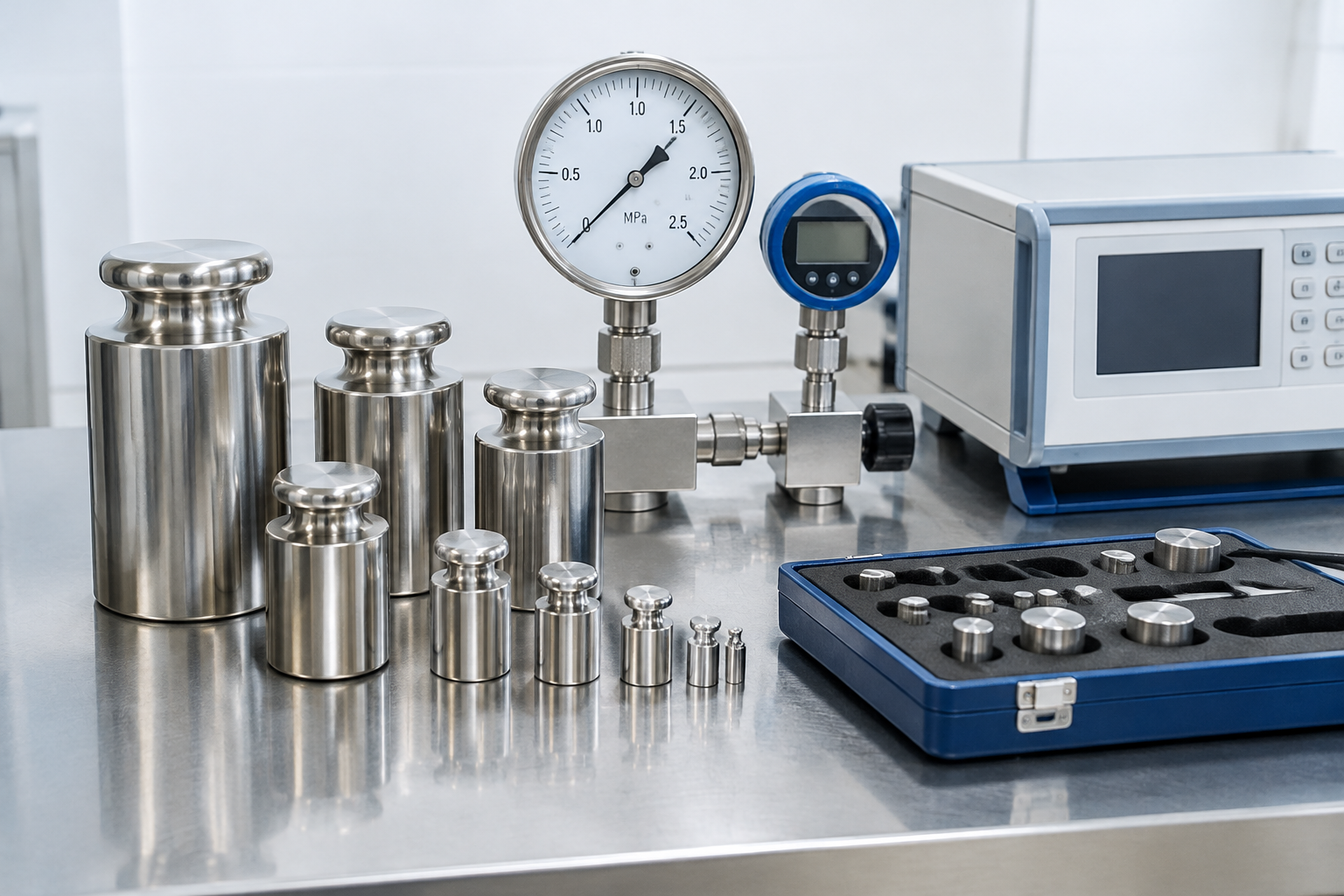
Every instrument ships with a calibration certificate traceable to national or international standards. The certificate names the measurement points, the reference standard used, uncertainty, and the calibration date. For audit trails covered in the burst-instrument article, the same principle applies: data output must be timestamped, tamper-evident, and exportable in a format your quality system can archive.
Recalibration intervals depend on use intensity and your quality procedures; ISO/IEC 17025 governs calibration labs but does not set a universal schedule. Ask for recommended intervals at quotation, and plan for periodic verification against a reference sample.
After-sales includes remote troubleshooting, spare parts, and on-site service where geography permits. Firmware updates and consumable fixture components—mandrels, clamps, seals—are handled case by case. If your line runs multi-shift production, confirm spare-part lead times and whether loaner units are available before the first instrument ships.
Three Pitfalls That Delay or Invalidate a Project
The fastest way to waste four to eight weeks is to submit a requirement that looks complete but isn’t.
Pitfall 1: Citing the standard name without the clause.
[ISO 4074:2026](ISO 4074:2026) governs several distinct test methods, and each method calls for a different instrument, fixture, and acceptance criterion. A purchase order that reads "per ISO 4074" without naming a clause gives us a standard with no test type. Burst pressure and elongation are measured under one clause; air leakage is measured under another; dimensional checks are a third. Build to the wrong clause and the instrument passes factory verification while failing your audit, because it was built for a test you did not need.
The avoidance move: include the clause number alongside the standard designation in every document you send us — inquiry, purchase order, and acceptance criteria.
Pitfall 2: Specifying voltage and plug type after the instrument ships.
An instrument built for 220 V / 50 Hz cannot be rewired in the field to suit a 110 V / 60 Hz installation without returning to the manufacturer. Plug standards vary by export market, and some markets require locally certified connectors that affect lead time. Retrofit work after shipment adds cost and delay that the original build would not have.
The avoidance move: confirm the installation country and the facility’s supply voltage before we cut the order. If the instrument will move between facilities or markets, tell us that at the quoting stage, not after delivery.
Pitfall 3: Qualifying on a pre-production sample, then skipping production-lot verification.
Pre-production samples are not production lots. Wall thickness, material batch, and forming consistency can all shift between the two. Verify the spec on production lots as well as on the pre-production sample — the instrument is the same, the procedure is the same, and the additional runs cost far less than a failed third-party audit or a product recall.
The avoidance move: add a production-lot test frequency to your written test plan before pre-production qualification closes. [ISO 4074:2026](ISO 4074:2026) specifies sampling requirements by lot size for tests such as air leakage and burst pressure; reference the relevant clause and its AQL or sample-size table so the frequency is tied to a defined lot quantity, not left to discretion. A plan that names the clause, the sample size per lot, and the acceptance criterion gives your QA team and any third-party auditor the same document — and it prevents the pre-production pass from being treated as a standing approval for every lot that follows.
When PEYOTAL Is Not the Right Supplier
Be direct: there are buyers we are not set up to serve well.
If you need a single instrument for a one-off run and have no plan to repeat it, a dedicated test instrument is hard to justify on cost. Renting time at a [third-party testing lab](Testing solutions) is usually the better path for that situation.
If your requirement is a fully integrated, in-line production system where instruments are embedded in the manufacturing process and talk to a central SCADA or MES layer, our standalone instruments are not designed for that architecture. We build test equipment, not production-line automation.
On certifications and geographies: if your market requires a specific regulatory approval we do not currently hold, tell us early. We will say plainly whether we can support it or not, rather than discovering the gap after the instrument is built.
What to Send Us
To produce a meaningful quote, we need the following from you:
- Standard and clause — e.g., [ISO 4074:2026](ISO 4074:2026) Clause X, not just the standard name
- Test type — burst/elongation, air leakage, dimensional, or a combination
- Sample dimensions or product family — nominal width, wall thickness range, or product category
- Throughput target — units per shift or per hour, so we can size the instrument correctly
- Voltage and plug type — supply voltage, frequency, and installation country
- Export certification requirements — any market-specific approvals the instrument must carry
Send these to us via [Contact and quotation](Contact and quotation) or request a free technical consultation through the same route.
Start the Conversation
If your spec is ready, send it to us and we will come back with a specific instrument configuration, not a catalogue page. If you are still working through the clause selection or dimensional requirements, a [free technical consultation](Contact and quotation) is the right starting point. Either way, reach out through PEYOTAL‘s contact route and tell us where you are in the process.